Essay – 9 July, 2026
This Independence Day found me watching my six-year-old daughter with quiet amazement. For the first time, she knows what she is celebrating. She recognizes our flag. She sings the national anthem with excitement. She knows that today is South Sudan’s birthday.
She does not yet know what it took for that birthday to exist.
As I watched her, I found myself thinking about the country she will inherit.
South Sudan is her inheritance.
She has inherited a country she did not have to fight for, yet one bought with millions of lives and sacrifices too many to count. Men and women gave up their futures so that children like her could simply know this place as home.
One day she will ask what it cost.
I hope we tell her the truth—not so she carries our grief, but so she understands that inheritance is never only received. It must be cared for, protected, and left better than we found it.
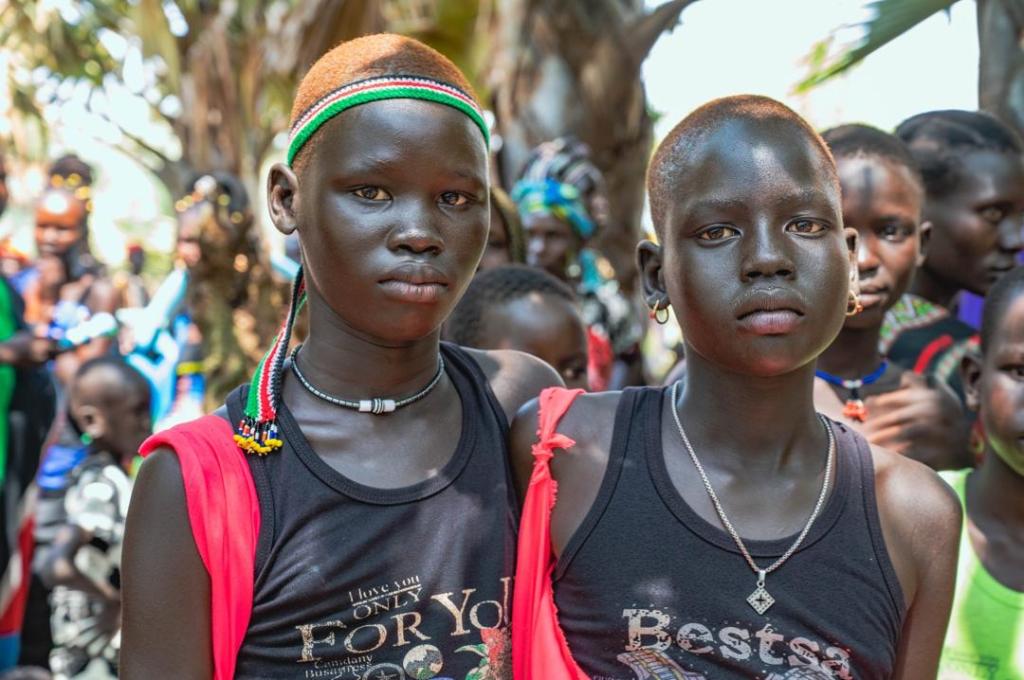
I had the privilege of celebrating our Independence in Kalthok at the gracious invitation of Hon. Deng Tong Kenjok, son of Aliab and Undersecretary in the Ministry of Labour. There, we celebrated with the mighty Aliab Dinka of Awerial County.
What stayed with me was not the ceremony.
It was the people.
We were not many, but we had come from every corner of South Sudan, from every region and from many of our tribes. There were bishops, Members of Parliament, ambassadors, government officials, SPLM party leaders, humanitarians, teachers, business people, women, youth, elders, friends, and friends of friends. Different histories, different journeys, different languages. The Aliab community welcomed us into their home, and for a few hours none of those things seemed to matter.
We were simply South Sudanese.
One after another, people rose to speak. They spoke of leadership rooted among the people, of investing in communities, of scholarships for young people, of maternal health, and of the possibilities resting quietly in this land.
As I listened, my thoughts drifted somewhere else—to children, to villages, to home.
When my turn came, I spoke about the education of the girl child and the empowerment of women. But I also spoke about home.
I have often wondered why we speak so easily about taking children to schools, and not as often about taking schools to children.
A child belongs first to a family, then to a community, and only then to a classroom.
I hope we build schools where our children are. I hope a child can learn to read without forgetting the stories told by her grandmother. I hope she can discover the world without first having to leave her own.
There are lessons a school can teach. There are lessons only a community can give. A nation needs both.
If scholarships are what we can offer today, then let our daughters stand where our sons stand. Opportunity should never ask whether a child is a boy or a girl. One day, I hope, every child will find a good school close enough to walk home before sunset.
When the speeches were over, we lit candles and prayed for the souls of those whose sacrifice gave us this country.
The light was gentle. For a while, it was enough—enough to remember, enough to be grateful, enough to stand quietly beside one another.
Later, the Aliab community did what South Sudanese communities have always done.
They gave.
Goats were presented to the visiting delegations—to representatives of the SPLM, Members of Parliament, friends of Hon. Deng Tong Kenjok, and the women who had travelled with them.
No speeches were needed.
The gesture spoke for itself.
Some things survive every war: the instinct to welcome, the instinct to remember, and the instinct to give.
Perhaps that, too, is part of our inheritance.
We left after sharing a meal together. Some stopped at the cattle camp before returning to Juba. Others watched the vast green landscape pass by, wondering what it might yet become. We spoke about roads, farms, schools, investment, and the quiet promise resting in this land.
The mountains held the evening sun, and for a while no one said very much.
Cattle wandered across the plains, outnumbering the people. Young people celebrated along the roadside. The flag was everywhere—on cars, on bodabodas, and across people’s chests.
For a little while, tomorrow did not feel so far away.
My thoughts returned, once again, to my daughter.
She belongs to a generation that will never know the liberation struggle as we knew it.
And perhaps that is the greatest gift we could ever give her.
Her task should not be to win a country.
Her task should be to love it enough to make it better.
South Sudan is our children’s inheritance. If we lived as though we believed that, what would we do differently?
← Writing
Next →

