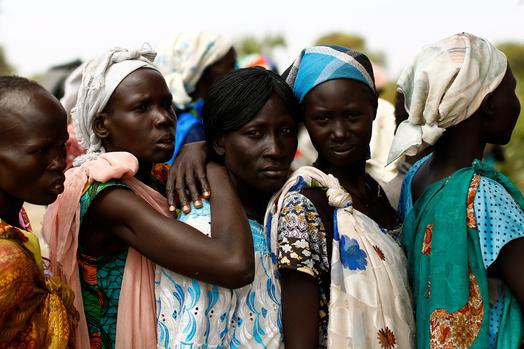
We founded this nation through immense human sacrifice in pursuit of justice and equality. Our history is one of resistance against multiple forms of marginalization—social, cultural, economic, political, religious, and racial—imposed by successive regimes in Sudan. It is therefore incumbent upon a nation born of such struggle not to permit the corrosive seed of marginalization to persist in another form: gender-based marginalization.
It is often startling how readily some of our male contemporaries deploy the label feminist as a form of dismissal the moment women’s rights or empowerment are mentioned. It seems that the mere act of acknowledging the plight of women is sufficient to provoke suspicion or ridicule. Yet the reality is undeniable: South Sudan remains profoundly underdeveloped, and for nearly half of its population—women—the indicators of neglect and exclusion are especially severe. If we continue to proclaim that women are the cornerstone of our society, then our actions must begin to reflect this conviction.
Any South Sudanese—feminist or otherwise—who is genuinely concerned with addressing the developmental challenges of our country cannot, in good conscience, ignore the condition of women. Feminist thought, in its many ideological expressions, may indeed find space in South Sudanese politics, particularly if women’s issues continue to be treated not as national social problems but as peripheral “women’s concerns.” Such an outcome would not be inevitable, but consequential. As Dr. John Garang famously observed, women are “the marginalized of the marginalized” in our society.
It is therefore puzzling when otherwise thoughtful men choose to adopt adversarial positions toward women’s empowerment—positions riddled with contradiction and defensiveness. When we acknowledge that women are the marginalized of the marginalized, are we accusing men as a category? Or does this reflexive defensiveness stem from an unexamined sense of guilt, masked by moral posturing? If we engage the argument without defensive blinders, it becomes clear that prioritizing women’s empowerment is not an attack on men; it is a strategy for national development. Emphasizing women’s needs does not diminish the importance of boys and men—it simply recognizes where the greatest structural disadvantage lies. A woman is the source of regeneration. Uplift her, and you uplift a nation.
To my sisters and mothers: we, too, bear responsibility. We must uplift women in esteem, grace, and dignity through our actions, in both private and public life. This may require raising our voices to demand space, and lengthening our strides to claim it. This is the work of our generation, and it is both a responsibility and a privilege. I am encouraged by the growing number of strong women—sisters, mentors, and allies—walking this path.
This essay is, therefore, both an affirmation and a call: an affirmation of women’s worth and labor, and a call for the solidarity of our fathers, husbands, brothers, and sons. As a society, we must recognize a simple truth: women already carry much of the labor essential to familial survival and societal continuity. For the collective good, we must ensure that women are strengthened, equipped, recognized, protected, balanced, and nurtured—so that they may contribute fully to the life of the nation while living healthy, dignified, and fulfilled lives.
© Apuk Ayuel Mayen. All rights reserved.
 Apuk Ayuel Mayen